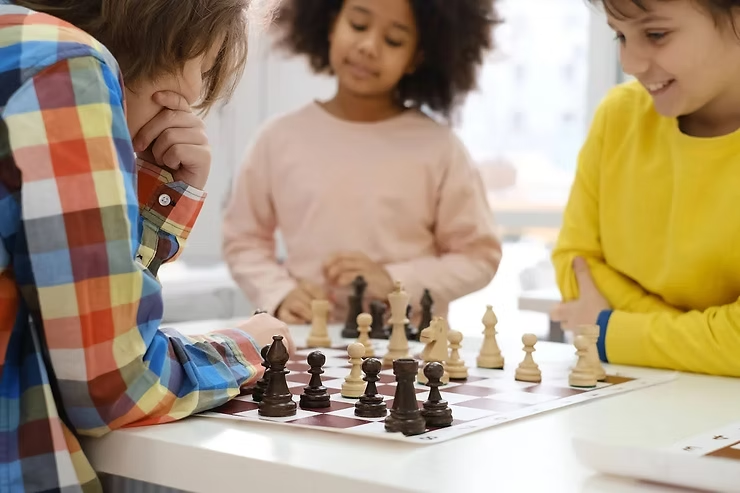
In an age where participation trophies are often handed out to preserve self-esteem and competition is softened for the sake of inclusivity, one crucial life lesson is increasingly being overlooked: learning to lose. Losing is as much a part of life as winning, and there is no better arena for teaching children this essential skill than the timeless game of chess. With its structured challenges, clear outcomes, and internal focus, chess becomes not just a mental battleground but an emotional classroom. Within the 64 squares of a chessboard, children learn patience, resilience, humility, and grace under pressure. They come to understand that defeat is not a reflection of failure, but a stepping stone toward growth.
Chess as a Mirror of Life’s Highs and Lows
Chess mimics life in countless ways. Like life, it demands planning, patience, and the ability to deal with unexpected setbacks. When a child sits at the board, they enter a world where choices have consequences, and where success is earned through strategic thinking and hard work. But just as often, their decisions will lead to mistakes, blunders, and loss.
These losses, though painful, offer valuable lessons. Unlike team sports, where blame can be spread around, chess is a one-on-one contest. The responsibility for each move lies squarely on the player. This accountability teaches children that setbacks are not always the result of unfair circumstances or external forces. Rather, they are often tied to our own choices. This realization can be empowering. It encourages introspection and self-improvement rather than blame and denial.
In life, children will face job rejections, relationship struggles, academic disappointments, and more. Learning to manage these moments begins early, and chess provides the perfect setting to understand that setbacks are natural, and can even be beneficial when used as a learning opportunity.
Developing Emotional Intelligence Through Defeat
When a child loses at chess, they experience a cocktail of emotions—frustration, disappointment, embarrassment, and sometimes even anger. These are not emotions we should seek to shield them from; rather, we should help them navigate and understand them. Losing offers children the opportunity to practice emotional regulation, a cornerstone of emotional intelligence.
The immediate aftermath of a chess loss is often a mix of silence, reflection, and emotion. Over time, however, children learn that each defeat carries a message. It might reveal a recurring tactical mistake, a lack of focus, or simply that their opponent played better. Learning to respond constructively to these realizations fosters resilience. Children gradually replace impulsive reactions with thoughtful responses, an emotional maturity that will serve them far beyond the chessboard.
Moreover, experiencing loss helps cultivate empathy. A child who knows what it feels like to lose is less likely to gloat when they win. They understand the emotional journey of their opponent and become more gracious in both victory and defeat. This emotional symmetry builds better relationships and stronger communities.
The Power of Reflection and Growth
One of the most important habits that chess instills in children is the practice of post-game analysis. After a match, players are encouraged to review the game, identify errors, and consider alternative strategies. This structured reflection is not about shame or regret—it’s about learning and evolving.
In a world that often emphasizes instant success, chess reminds children that progress is incremental. Improvement comes not from denying mistakes but from confronting them with honesty and curiosity. This growth mindset is invaluable in academics, sports, relationships, and careers. A child who learns to analyze their losses in chess without crumbling emotionally is better equipped to tackle life’s challenges with a similar outlook.
This process also builds patience. Children begin to understand that excellence takes time. Even grandmasters, with years of experience, make mistakes. Accepting that imperfection is part of the journey is both comforting and motivating. It removes the pressure of perfection and replaces it with a drive for progress.
Humility, Confidence, and Character
Winning feels good, and it certainly has its place in child development. But winning alone does not build character—how one handles both victory and defeat does. Chess teaches children to balance humility and confidence in a way that few other activities do.
When a child wins, especially after a long streak of losses, they know the value of that success. It feels earned, not given. That victory brings with it a quiet confidence that is grounded in effort and learning. At the same time, because they’ve tasted defeat, children tend not to become arrogant. They remain aware that another loss is just one misstep away.
On the flip side, losing gracefully also builds character. A child who can smile after defeat, shake hands, and express appreciation for the game and the opponent is displaying a strength that will serve them throughout their life. It takes courage to lose well. It takes maturity to see beyond the scoreboard and value the experience itself.
This dynamic interplay between humility and confidence becomes a moral compass. Children learn to set goals based on personal growth rather than external validation. They develop a sense of self-worth that is not tied to constant success, which is crucial in today’s hyper-competitive, achievement-oriented world.
Chess Builds Resilience for the Long Game
Resilience is perhaps the most powerful gift that chess gives to young players. To keep coming back to the board after a loss, to study and practice, to risk failing again—this is the essence of grit. Resilient children are not deterred by difficulty. They understand that failure is not the end but a natural part of the process.
In chess, every loss is a call to adapt. Maybe the child played too fast. Maybe they didn’t see a hidden tactic. Each defeat offers specific feedback, and that feedback becomes a roadmap for improvement. Over time, children begin to crave this feedback because they see how it helps them grow. Losing, rather than something to fear, becomes something to learn from.
This resilience doesn’t stay on the board. It permeates into schoolwork, friendships, and personal goals. When children develop a healthy relationship with failure early on, they become more willing to take risks, try new things, and persevere through difficulties. They understand that mastery is not a straight path but a winding road full of lessons.
Conclusion
Chess is more than a game. It is a teacher, a mirror, and a companion on the journey of emotional growth. By teaching children how to lose—and how to lose well—it equips them with tools that are crucial for a balanced and fulfilling life. In every fallen queen or checkmate received, there lies an opportunity to grow stronger, wiser, and more compassionate.
Children who learn to navigate defeat with grace are better prepared for the unpredictable nature of life. They develop emotional intelligence, humility, resilience, and a growth mindset that gives them an advantage far beyond the confines of a chessboard. Winning is wonderful, but it is in losing that the deepest and most lasting lessons are learned.
Rather than shielding our children from loss, we should guide them through it. Let them lose. Let them cry. Let them reflect. And then, let them rise—stronger, more focused, and more emotionally prepared for whatever challenges life places in front of them. In doing so, we prepare not just better chess players, but better human beings.
Need a Leading Academic Enrichment Program Near You?
At AlphaMinds Academy, we are passionate about helping students reach their fullest potential! Whether your child wants to strengthen their skills, explore new subjects, or get ahead academically, our engaging classes in Chess, Coding, Logic, Math, Reading, Essay Writing, Robotics, and Russian are designed to inspire curiosity and build confidence. With experienced instructors, a supportive environment, and both in-person and online options, we make learning fun and accessible for every student. Reach out to us today and let’s work together to unlock your child’s success!